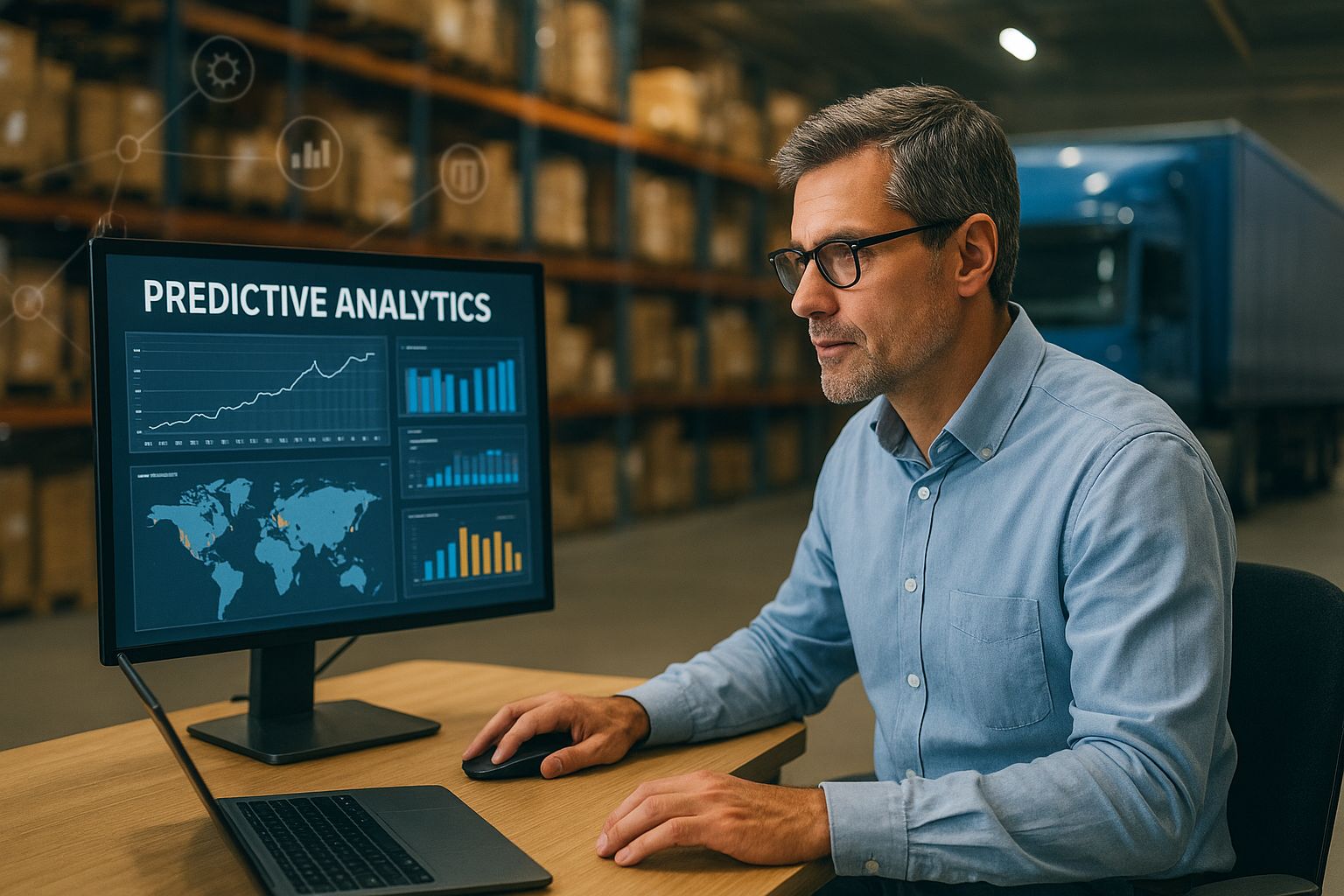
In recent years, the supply chain industry has witnessed a significant transformation driven by the integration of advanced technologies. Among these, AI-driven predictive analytics has emerged as a pivotal tool, revolutionizing supply chain operations by enhancing forecasting accuracy and bolstering decision-making processes.
Predictive analytics leverages vast datasets to identify patterns and predict future outcomes with remarkable precision. For supply chain managers, this means improved capability to anticipate demand shifts, optimize inventory levels, and enhance customer satisfaction. As global markets become increasingly volatile, the ability to preemptively address potential disruptions provides a distinct competitive advantage.
One exemplary case highlighting the benefits of AI-driven predictive analytics is the global retail giant, Walmart. By implementing a sophisticated supply chain analytics system, Walmart has successfully reduced stockouts and optimized its inventory across thousands of stores. The company’s system uses AI to analyze real-time sales data, weather conditions, seasonal trends, and other factors to accurately forecast demand. This shift towards data-driven decision-making has reportedly saved Walmart billions of dollars annually.
Beyond retail, industries like automotive and pharmaceuticals are also reaping the benefits. Automotive manufacturers are utilizing predictive analytics to fine-tune their supply chain operations, anticipating parts shortages and adjusting production schedules accordingly. This agility in response planning not only mitigates risks but also enhances overall operational efficiency.
However, implementing AI-driven predictive analytics comes with its challenges. Organizations must ensure they have the necessary infrastructure to handle large volumes of data securely and efficiently. Additionally, there is a requisite need for skilled personnel who can interpret data insights and translate them into actionable strategies.
As supply chain dynamics continue to evolve, businesses adopting AI-driven predictive analytics will position themselves ahead of the curve. By providing deeper insights into customer behavior and market trends, these tools can lead to leaner, more responsive supply chains capable of thriving in today’s fast-paced environment.
In an era marked by digital transformation, embracing AI-driven predictive analytics is not merely a technological upgrade—it’s a strategic imperative.